
At the end of a good inventing session, the energy in the room is high. The team has generated new ideas, people feel engaged, and there is plenty of optimism about the future.
But after the session, everyone returns to their silos and gets back to their normal roles and work. The new ideas feel daunting and don’t progress. When that happens repeatedly, teams start to notice. When ideas never go anywhere, engagement drops and culture metrics follow.
There are systemic changes organizations can make to fix this problem. When done right, those changes can increase innovation speed by as much as 6x. But you do not need to redesign your organization to keep momentum going.
Here are three practical things any team can do immediately after an inventing session to keep ideas moving forward.
1. Test Ideas For Clear Meaningful Uniqueness
You do not need expensive market research to start learning. In just a few minutes, you can evaluate whether an idea is clear, persuasive, and likely to succeed.
Tools like Truth Teller on Jump Start Your Brain allow teams to quickly assess ideas and get initial metrics. These early scores help identify which ideas are ready to move forward and which ones need rethinking.
Some teams get stuck trying to perfect every word before taking the next step. Having a numeric measure helps break that pattern. When the score says the concept is strong enough, the team can move forward and learn something new.
Across our work, more than 10,000 ideas have been tested using this system. The goal is not perfection. The goal is rapid learning.
2. Estimate the Financial Value
Your estimate will be wrong. But it will still be useful.
Think of this step as a first and very rough draft business plan. The goal is to explore how the idea could create value for the organization.
One of the most common approaches we use is sales forecasting with the Foute-Woodlock equation combined with a Monte Carlo simulation. We also use tools that generate five-year sales projections. But the exact method matters less than the thinking behind it.
Focus on the assumptions and where the value comes from.
Pro tip: For every input in your financial model, include high and low estimates to reflect uncertainty. Then report the variance in the projected value. This helps the team understand both the opportunity and the risk. Where there is high uncertainty, we go learn more.
3. Run an Action Planning Meeting
This is the most important step.
Action planning meetings follow a clear structure that helps teams discuss where the idea stands in terms of three risks: market risk, technical risk, and organizational risk.
The goal of the meeting is simple. Identify what the team does not yet know and decide how to get smarter.
The meeting ends with up to three learning actions. Each action should clearly define what the team will learn and how they will learn it. If the team skipped the first two recommendations in this article, those will often become the first actions.
We use a structured tool on Jump Start Your Brain to guide these meetings. The format guarantees all types of risk are covered and that everyone is heard in an efficient manner. It works similar to the Delphi approach for estimation where the team diverges and converges throughout the process, eventually coming to a census on what to do next. With just a few learning cycles to go do, teams can go learn more and repeat the process the following week without taking away too much time from their other responsibilities.
Keep the Mindset of Continuous Learning
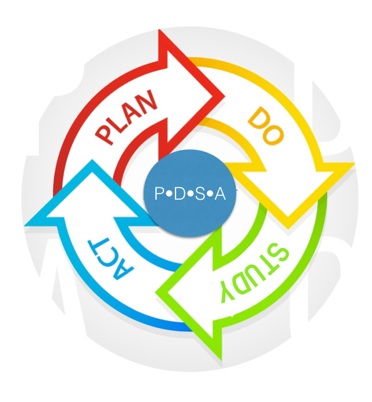
These are all practical steps that teams can take immediately, and there are tools available to guide each part of the process. But the most important ingredient is the mindset of continuous learning behind them.
Be transparent about what you do not know, ask for help, and keep moving the idea forward through small learning cycles.
When teams do that, inventing sessions stop being isolated events and start becoming the beginning of real progress.