
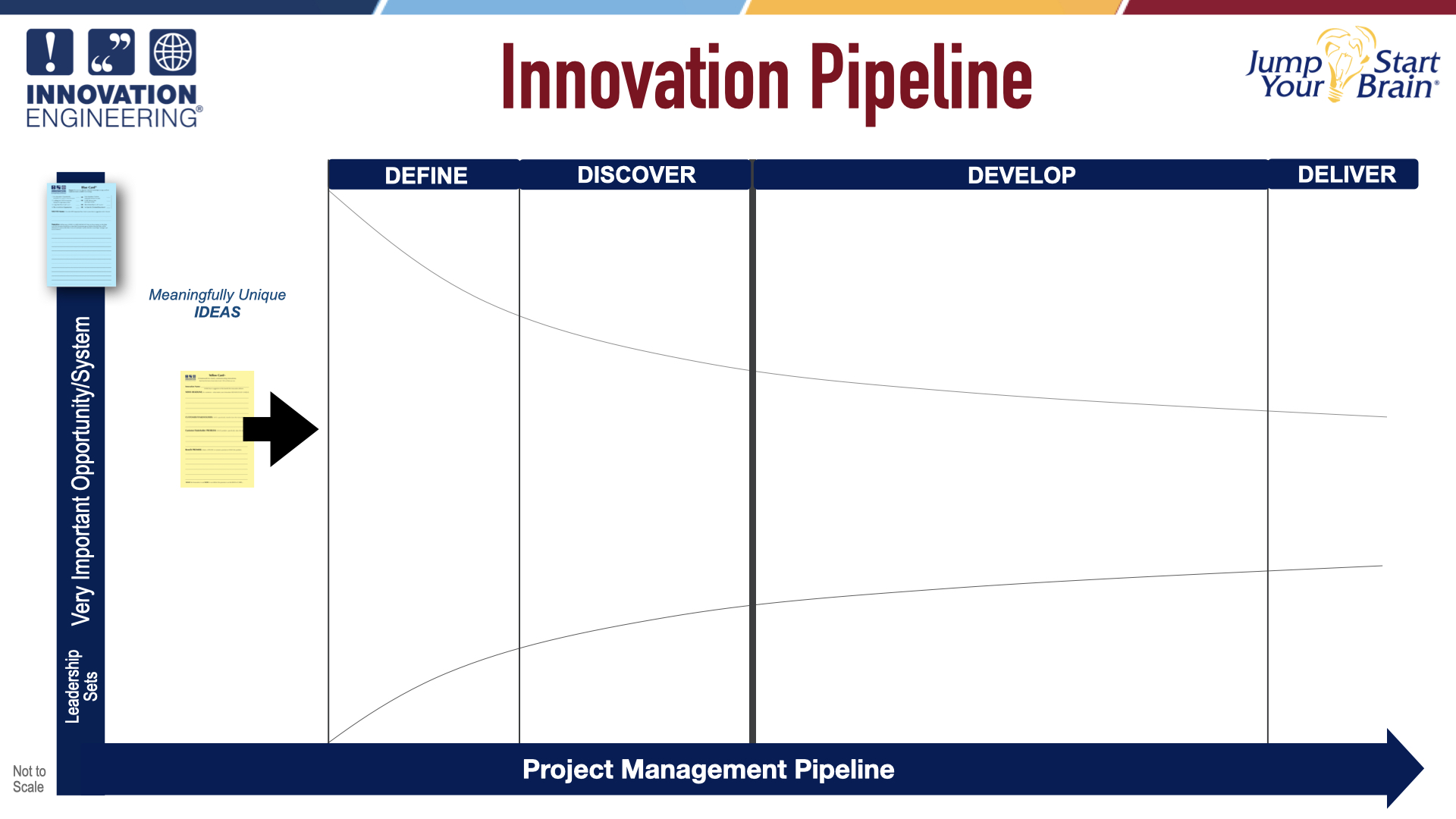
Build the Operating System for Future Growth
Your company has systems for running today's business. Here's what it takes to build one for creating tomorrow's.
Most leadership teams we sit down with have invested real time and money into systems that make today's business run better. Sure there are still flawed work systems to improve, but in general they know what to do. Far fewer leaders have a system for creating what comes after today. That gap is usually the actual reason growth feels unpredictable, no matter how talented the team is.
You're Built to Execute, Not to Create
The trouble shows up when you ask: where is next year's growth actually going to come from? For a lot of leadership teams, the honest answer depends on who happens to have a good idea and enough spare time to push it forward.
- Systems for efficiency
- Systems for reducing waste
- Systems for managing quality
- Systems for delivering today's products
Innovation Is a Skill You Build, Not a Trait Some People Have
Innovation used to get treated like a personality trait, something a few creative people had and everyone else didn't. The organizations pulling ahead now treat it as a business capability, taught, measured, and improved the same way you'd improve any other operating discipline.
Greg Lemmon (our lead statistician) even build a model for who will be most successful with innovation projects, turns out what matter most is their ability to apply what they just learned. That's why our training incorporates application assignments to build this mindset and muscle.
Teams with real innovation capability spot valuable opportunities before competitors notice them, take on problems without an obvious answer, generate a wider range of strong ideas, get a reliable read on which ones are worth funding, and carry a concept through to execution without losing confidence along the way.
Why Lean and Six Sigma Aren't Enough
Most organizations have already invested heavily in improvement systems. Lean. Six Sigma. Operational excellence. Continuous improvement. All genuinely valuable, and all of them make existing work run better.
None of them were built to answer what new opportunities should we pursue or what problems are actually worth solving or which ideas are most likely to succeed or how do we create a breakthrough instead of another incremental gain? Those questions need their own system, one built specifically for creating the future rather than polishing the present.
The missing piece is a system built specifically for creating what comes next.
We Engineer Innovation Instead of Hoping for It
After more than 30 years studying why some ideas succeed and most don't, we've built our approach around four things working together.
We've created thousands of ideas using a lot of different creative exercises. We know which ones work with what kind of people on what kind of challenges, because we've tried them, measured the results.
A disciplined, teachable process for discovering opportunities, creating solutions, evaluating ideas, communicating value, and executing with confidence. We believe that we can enable everyone to innovation as long as they are willing to try.
Our Truth Teller technology tests ideas against proven market success factors before you commit real budget to them. 7x more accurate than humans. For internal risk we leverage the Delphi method with your internal experts to calculate odds of success.
We're not chasing one project's success. We help you build the underlying system that keeps producing good ideas long after we've left the room.
A Proven Path From Opportunity to Execution
1. Discover growth opportunities. Look at customer needs, market shifts, emerging technology, and unresolved business challenges to find out where growth is actually most likely, instead of guessing.
2. Create better solutions. Give teams a structured, repeatable process for generating and improving ideas, instead of leaving it to the occasional brainstorm.
3. Evaluate before you invest. Test ideas against proven criteria before committing real budget, so investment goes toward the opportunities with the strongest potential.
4. Execute with confidence. Build the habits, leadership behaviors, and operating rhythms that actually turn a good idea into a result.
What Leaders Can Actually Control
No one can promise that every idea will work. Markets shift, customers change, competitors respond. What a leadership team can control is the quality of the system used to create, communicate, and evaluate opportunities in the first place.
Make better decisions earlier, reduce wasted investment, increase the number of genuinely valuable ideas in the pipeline, build capability across the team, and create a repeatable path from opportunity to execution.
The goal is more than a single successful innovation. The goal is an organization that can create that kind of result again and again.
More Than Another Workshop
Most innovation programs create energy for a few days, and then everyone drifts back to old habits. Real change means building innovation into how work actually gets done, not adding it to the calendar as an event.
- Innovation as an occasional event
- Ideas coming from a handful of people
- Growth results that are hard to predict
- Innovation built into how work runs
- Capability spread across the organization
- A growth process you can repeat on purpose
If you want to grow, you need better ideas AND a better system for turning ideas into results.
That's the real test for a leadership team today. Do you have a system that turns creativity into results, again and again, or does growth still depend on catching a good idea at the right moment?
Find Out What Stage Your Growth System Is In
Take the seven-minute Work Systems Assessment. You'll see your results immediately, no sales call required to find out where you stand.
Take the Assessment 7 minutes. Instant results.Eureka! Ranch has spent more than three decades helping organizations build systems for creating what's next. If that's a conversation worth having, we're glad to start it.