
Build an Organization That Improves Itself
Not a project. Not an event. A way of working where everyone, not just a few specialists, is equipped to spot what's broken and fix it.
Schedule a CallProactive Problem Solving
It comes down to three behaviors, repeated by everyone, everywhere in the organization, until they stop being a program and start being how work gets done.
Work Smarter
Start with purpose. Look for better care, service, quality, or value within your own area, and build it deliberately instead of hoping it happens.
Stop the Stupid
Start with friction. Find the things that get in the way of good work, the workarounds, the repeat fixes, the frustrations everyone already knows about, and delete them.
Lead Change in Your Sphere of Influence
You do not need a title to fix what is within your reach. Every employee can improve the systems they touch, instead of waiting for someone else to do it.
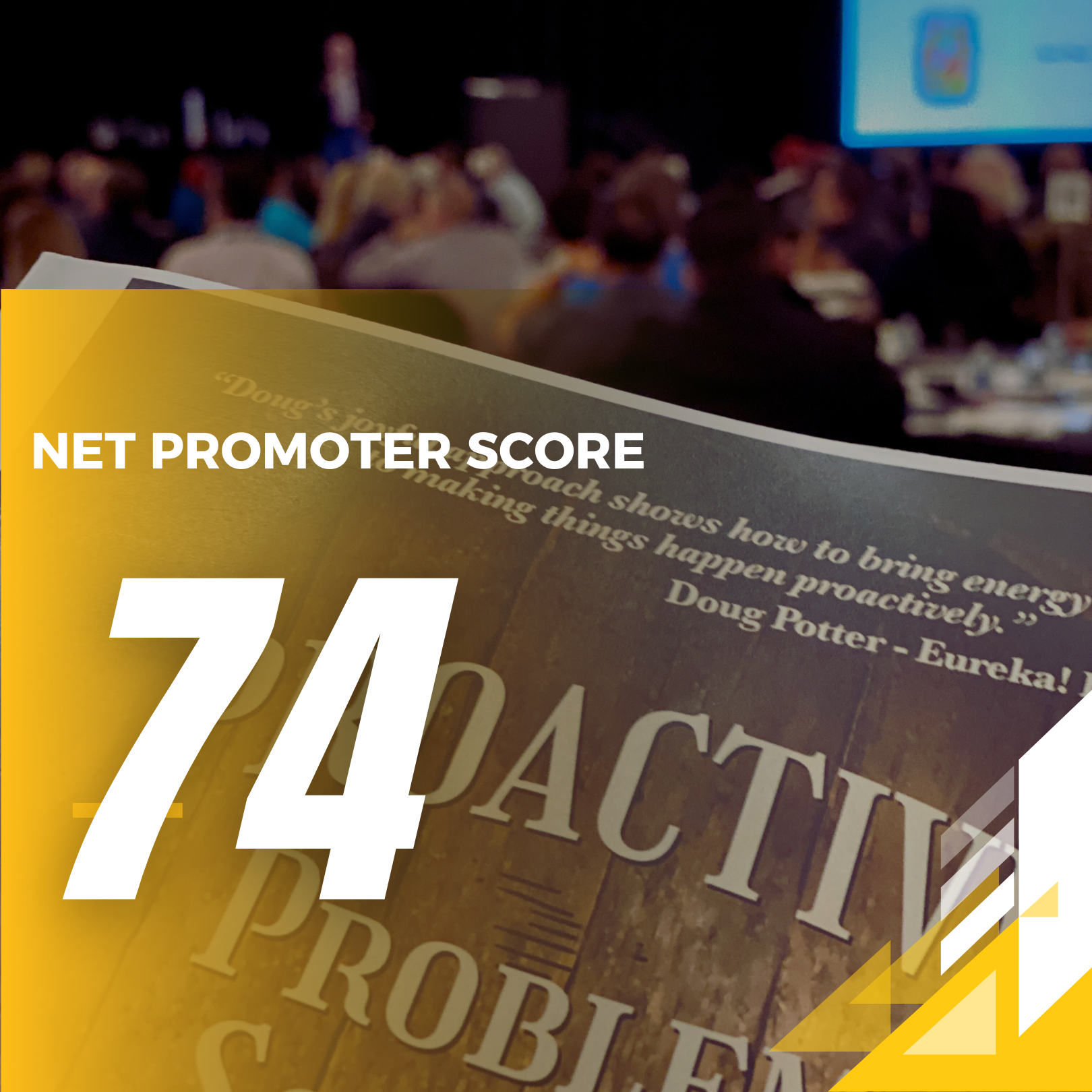
Employees genuinely love this.
Training programs do not usually earn scores like this, especially not inside industrial and manufacturing workforces who have sat through plenty of trainings they didn't ask for. A Net Promoter Score of 74 means people are not just tolerating this. They're recommending it.
That matters because adoption is the whole game. A system nobody wants to use never gets the chance to compound.
Stop blaming people. Start fixing systems.
Most organizations default to a reactive posture: something breaks, someone gets blamed, the underlying system stays exactly the same and breaks again next month. Stop the Stupid is a different posture entirely.
Reactive Posture
- Fix the individual mistake, not the cause
- Blame lands on whoever was closest to the problem
- The same flawed workflow breaks again later
- Managers spend their days firefighting instead of leading
Proactive Posture
- Find the flawed system causing the mistake
- Fix it once, permanently, so it cannot recur
- Workers are trusted partners in the fix, not suspects
- Managers get their time back for actual leadership
Fix what people hate first. Trust follows.
Before a team will tackle the big, politically complicated systems, they need to see that leadership is willing to fix the small things that have been quietly frustrating them for years. That trust has to be earned, and it's usually earned fast.
Jenny's Back Hurt for Five Years. It Took One Session to Fix.
During a training session at Kaivac, a commercial cleaning equipment manufacturer, Doug Hall asked the room a simple question: does anyone know anything "stupid" about how they work? One employee, Jenny Myers, raised her hand. Her back had hurt for five years, from lifting heavy machines into boxes for shipping, every shift.
Instead of writing it down for later, the team stopped the training and ran a live inventing session right there in the room. The fix: build the box around the machine instead of building the box first and lifting the machine into it. Jenny's back stopped hurting.
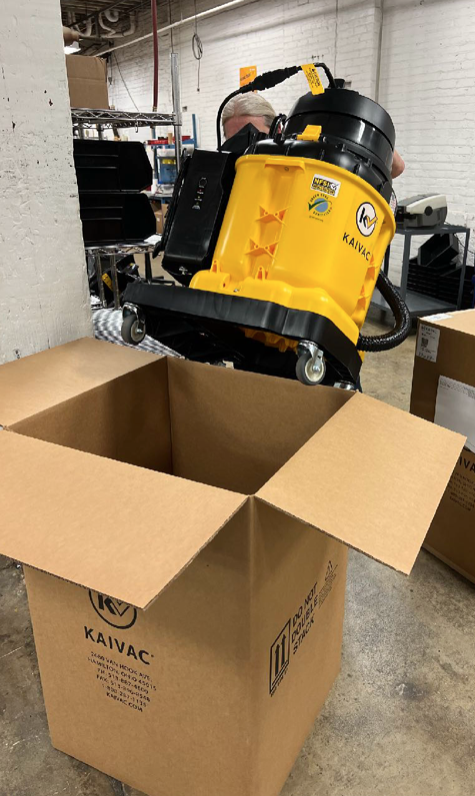
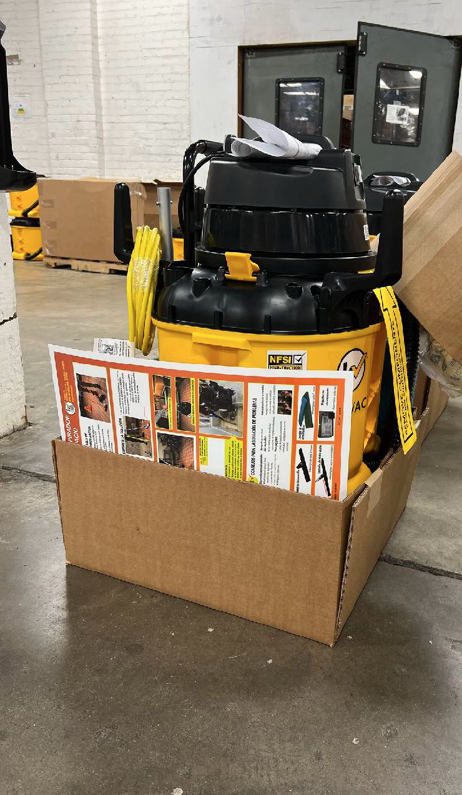
Because the fix solved something that had actually caused her pain, Jenny became one of its loudest advocates on the floor. That's what fixing frontline friction first actually buys you: real, earned trust, not a mandate from the top.
One standard way to communicate an idea, every time.
Most meetings run on half-formed pitches. Someone names a frustration, someone else floats a fix, and the room is left guessing whether it's actually a good idea or just the first thing anyone thought of. That makes it nearly impossible to compare ideas fairly or move the strong ones forward with confidence.
A Yellow Card forces discipline before creativity. Instead of a vague pitch, every idea gets written down the same way, so the problem is clear, the fix is clear, and anyone hearing it for the first time can see exactly why it's worth doing.
Once the problem is clear, we don't just brainstorm.
A typical brainstorm gets whatever's already in the room. A structured Create Session deliberately pulls in outside thinking first, so the team isn't just recombining the same six ideas everyone already had.
Customer Mining
What customers actually need, want, and struggle with, beyond what they say in a survey.
Market Mining
What competitors and adjacent industries are already doing, tried, or abandoned.
Wisdom Mining
What research, experts, and history already know about a problem like this one.
Technology Mining
What new tools, equipment, or technical approaches could solve this differently.
Future Mining
Where trends are heading, so the fix holds up past this quarter.
Unrelated Mining
How a completely different industry solved a structurally similar problem.
Fear is what kills good ideas before they get tested.
An idea that threatens someone's job, budget, or ego gets quietly smothered long before anyone can prove whether it actually works. The fix isn't more courage. It's making testing small, fast, and cheap enough that trying something stops feeling risky.
Design a Small Test
Not the whole rollout, just enough of a test to learn whether the idea holds up in the real world.
Run It, Fast
Run the test quickly, so a wrong guess costs almost nothing to find out.
Stop. Think. Learn.
Pause before reacting. The real question isn't what happened, it's what we actually learned from it.
Pivot, Don't Panic
Most ideas need more than one loop before they work. That's expected, not a sign something went wrong.
This isn't another continuous improvement framework.
Lean, Six Sigma, and most continuous improvement programs are excellent at control and discipline. They tend to run out of road in the same place: generating the actual ideas that fix what's broken, and getting people to try them without fear of getting it wrong.
Typical Improvement Programs
- "Brainstorm it" is usually the entire ideation method
- Driven by a quality department or small group of experts
- Fear of failure quietly kills bold ideas before testing
- Improvement happens in scheduled projects and events
Proactive Problem Solving
- Structured stimulus mining and Create Sessions generate real ideas
- Every employee is equipped to lead change in their sphere
- Fast, low-cost PDSA testing removes the fear of trying
- Improvement becomes how work gets done, every day
Proactive Problem Solving, by Doug Hall

Doug Hall wrote the playbook behind everything on this page. It lays out the philosophy, the tools, and the real-world stories, like Jenny's, that show what happens when an entire organization is equipped to find and fix what's broken instead of waiting for someone else to do it.
Learn More About the BookBuild an Organization That Improves Itself
The only system designed to make every employee capable of improving the systems within their sphere of influence, turning proactive problem solving into the way work gets done.
For established organizations that want improvement to happen throughout the business instead of relying on leaders, experts, or special projects to drive it: most organizations are built to react. Problems get escalated, managers become firefighters, and employees learn to work around flawed systems rather than improve them. Improvement happens in bursts through projects and initiatives, but rarely becomes a capability of the whole organization.
We give your entire organization the ability to identify problems, create solutions, test what works, and improve the systems they touch, so the business gets smarter every year.
Proactive Problem Solving teaches people to look beyond individual performance and find the system creating the problem. Employees learn to improve what is within their sphere of influence instead of waiting for someone else to fix it. The work starts by removing unnecessary friction from everyday jobs, which gives employees a reason to engage because they can immediately make their own work better. Leaders learn to define intent and coach improvement rather than control execution. Over time, improvement becomes habitual, managers spend less time reacting, and innovation becomes a normal part of everyone's job.
An organization that keeps getting better, on its own.
Let's talk about what Proactive Problem Solving would look like inside your organization.
Schedule a Call