
Improve the Work Your Business Depends On
The only approach that applies a proven inventing system to redesign the systems people work in, instead of asking people to simply work harder.
Schedule a CallYour best people are losing hours to problems that shouldn't exist.
Smart people are often trapped inside systems that make good performance harder than it should be. Employees build workarounds, managers spend their days fixing preventable problems, and leaders respond to symptoms instead of the system that created them. None of that shows up on a P&L line item — but it's where a huge share of your organization's time, energy, and opportunity actually goes.
"The systems you have delivered the results you get."
Most organizational frustration is a systems problem, not a people problem. Dr Deming's research holds up in nearly every organization we've worked inside.
W. Edwards Deming
Jenny's back hurt for five years. It took one session to fix.
Kaivac is a working example of what happens when an organization stops accepting broken systems as "just the way it is" and starts treating them as solvable problems.
The Box That Should Have Been Built the Other Way Around
During a training session at Kaivac, a commercial cleaning equipment manufacturer, Doug Hall asked the room a simple question: does anyone know anything "stupid" about how they work? One employee, Jenny, raised her hand. Her back had hurt for five years — from lifting heavy machines into boxes for shipping, every shift, because she wasn't a big person and the machines were.
Instead of writing it down for later, the team stopped the training and ran a live inventing session right there in the room. The fix: build the box around the machine instead of building the box first and lifting the machine into it. Jenny's back stopped hurting. And because the fix solved something that had actually caused her pain, she became one of its loudest advocates on the production floor.
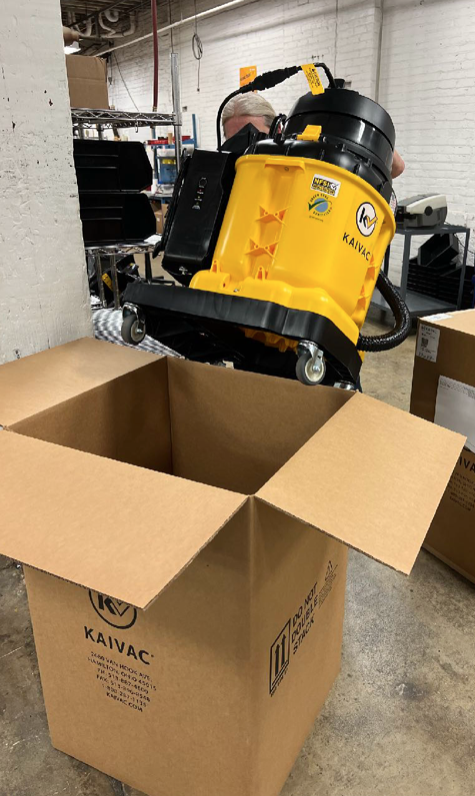
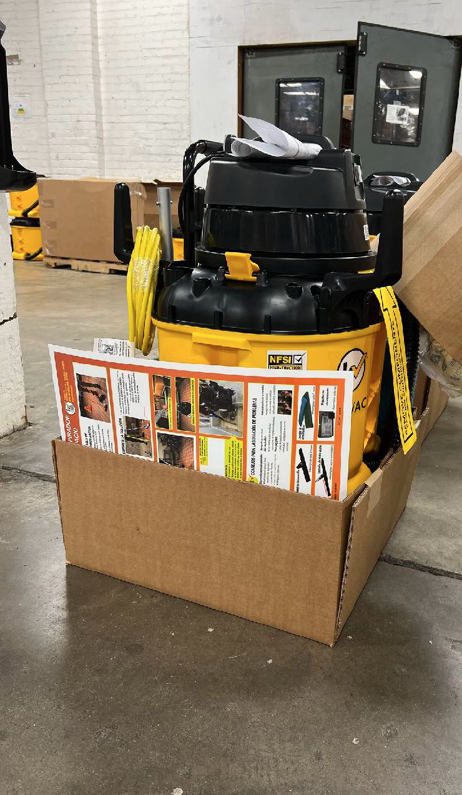
Two entry points into a systems-powered culture.
There's no single right place to begin — which entry point makes sense depends on your organization's situation. Both lead to the same outcome: a culture that improves its own systems instead of working around them.
Working Smarter
Best when leadership has a clear strategic priority — a bottleneck, a growth constraint, a critical process — and wants faster, more reliable results from it.
- Begins with a high-value system: sales, onboarding, fulfillment, service
- Targets measurable ROI fast, often within one cycle
- Ideal when leadership needs to prove the model works
Stop the Stupid
Best when engagement is the bigger issue — when employees are frustrated by everyday problems no one has taken the time to fix.
- Begins with the "stupid" problems employees already complain about
- Builds trust and engagement fast because the wins are personal
- Ideal when you need buy-in before tackling bigger systems
Improve the Work Your Business Depends On
The only approach that applies a proven inventing system to redesign the systems people work in, instead of asking people to simply work harder.
For established organizations where flawed processes are creating bottlenecks, frustration, inconsistent performance, or unnecessary work: smart people are often trapped inside systems that make good performance harder than it should be. Employees create workarounds, managers spend time fixing preventable problems, and leaders respond to symptoms instead of changing the system that created them.
We identify and invent solutions to the systems costing your organization time, money, and energy, while creating measurable improvements in both business performance and employee experience.
We start with Systems Mapping to make the current system visible, including the flaws people have learned to work around. Then we use the same structured inventing methods that produce breakthrough products and services to create better ways of working. The focus is on changing the system, not blaming the employee.
Organizations can start with the "stupid" problems that frustrate employees and build engagement, or attack critical systems such as sales bottlenecks where faster improvement can produce an immediate ROI. The key is leadership willingness to try something new, learn from the results, and scale what works.
Systems Mapping: making the invisible visible.
You can't fix a system you can't see. Before we invent anything, we map what's actually happening. Never ignoring the flaws and workarounds people have quietly learned to live with.
Define System Boundaries & Scope
Before mapping, we determine what's inside the system and what lies outside it, so the map stays manageable. This means clarifying the primary question or problem to solve and deciding which actors, processes, and timeframes are actually relevant.
Identify the Core Phases & Sub-Phases
A map can't exist without its building blocks. We lay out the critical phases and sub-phases the system moves through, depending on the type of map we're building.
Connect & Define Relationships
We map how each phase actually connects to the next including the handoffs, dependencies, and decision points that determine whether work flows smoothly or stalls.
Identify Flaws — Variance & Psychology
We look for where the system breaks down in two ways: where outcomes vary unpredictably, and where human behavior (fear, incentives, workarounds) is quietly compensating for a flawed process.
Metrics
We identify what's actually being measured today, what should be measured, and where the absence of a metric is letting a flaw hide in plain sight.
Stakeholders & Roles
We map who owns each part of the system, who's affected by it, and where accountability is unclear — often the real reason a known problem never gets fixed.
PDSA Cycles
We build in Plan-Do-Study-Act cycles from the start, so every fix is tested and learned from in the real world rather than rolled out as a one-time guess.
Grounded enough to trust. Creative enough to matter.
Systems Mapping on its own isn't unique, plenty of firms can draw you a process diagram. Our difference is what we do with it: we bring Stimulus and Diversity into the room to spark bigger ideas than the obvious fix, and we use PDSA cycles to test and learn fast instead of betting everything on one guess. It's the combination of a validated, rigorous method with real creativity that lets you work smarter than competitors still stuck fixing symptoms.
Standard Systems Mapping
- Documents the current process
- Identifies obvious bottlenecks
- Produces incremental fixes
- Relies on the same few people's thinking
- Often ships a plan, not a tested solution
Eureka! Ranch Systems Mapping
- Documents the system with its psychology and flaws
- Brings deliberate Stimulus & Diversity into the room
- Invents bigger, non-obvious solutions, not just the obvious fix
- Tests ideas fast with PDSA cycles before scaling them
- Ships a tested improvement, backed by real learning
The key is leadership willingness to try something new.
Let's map the system costing you the most time, money, or energy and find out what's actually possible.
Schedule a Call